The Ultimate Freshwater Pearl Necklace Guide
Discover our comprehensive freshwater pearl necklace guide to find the perfect strand. Learn about luster, nacre, sizing, and styling for everyday elegance.
Table of Contents
- Understanding Pearl Quality
- Sizing and Length Options
- Styling Your Freshwater Pearls
- Care and Maintenance
A freshwater pearl necklace guide is an informational resource detailing the selection, evaluation, and care of cultured pearl jewelry. It covers essential quality factors like luster and nacre thickness, explains standard sizing measurements, and provides practical styling advice to help buyers choose the ideal strand for their personal collection.
By the Numbers
- Freshwater cultured pearls account for 95 percent of global pearl production by volume (GIA, 2024)[1].
- The most commonly sold size range for strands is 7.5-8.5 millimeters in diameter (Pearl Paradise, 2025)[2].
- Among necklace lengths, 16- and 18-inch strands represent 68 percent of sales (Jewelers of America, 2025)[3].
- High-quality cultured pearls typically have nacre thickness exceeding 0.8 millimeters (Journal of Gemmology, 2024)[4].
Reading a reliable freshwater pearl necklace guide is the first step toward building a timeless jewelry collection. Cultured pearls have captivated wearers for generations, offering an elegant alternative to traditional gemstones. Unlike saltwater varieties, these gems are cultivated in mussels, allowing for a wider variety of shapes, sizes, and natural overtones. This accessibility makes them a favorite among both novice buyers and seasoned collectors.
However, navigating the market requires an understanding of specific quality factors. Evaluating surface quality, measuring nacre thickness, and selecting the right clasp can feel overwhelming without proper knowledge. In this article, we will explore the fundamental characteristics that determine value, break down standard sizing options, and share expert styling techniques. Whether you are looking for a classic strand or a unique piece, this overview will equip you with the knowledge to make an informed purchase.
Key Quality Factors in a Freshwater Pearl Necklace Guide
The overall value of any cultured pearl strand depends heavily on its visual and structural characteristics. When evaluating these gems, luster remains the paramount factor. According to Robert Weldon from the Gemological Institute of America, “Luster is the most important characteristic of a pearl; the sharper the reflections on its surface, the higher its quality” (GIA, 2025)[5]. This sharp reflection provides the jewelry’s signature iridescence. For more detailed scientific information, explore the comprehensive pearl quality factors overview.
Beyond surface shine, buyers must consider nacre thickness. Nacre is the crystalline substance secreted by the mollusk. Laboratory testing shows high-quality options typically boast a nacre thickness exceeding 0.8 millimeters (Journal of Gemmology, 2024)[4]. A thicker layer ensures durability and deeper overtones.
Surface quality is another critical metric. While flawless specimens are rare, minor blemishes are acceptable if they do not compromise structural integrity. Akira Hyatt advises buyers to “prioritize nacre thickness and surface quality over minor variations in size – the overall glow on the neck is what the eye sees first” (Blue Nile, 2025)[6]. Focusing on these attributes is a fundamental principle in any guide to freshwater pearl necklaces.
Sizing and Length Options
Selecting the correct dimensions ensures the jewelry complements the wearer’s neckline. The diameter of individual pearls is measured in millimeters, directly impacting visual weight. Industry data indicates the most commonly sold size range is 7.5-8.5 millimeters in diameter (Pearl Paradise, 2025)[2]. This pearl size offers a balanced look for daytime or evening wear.
Equally important is the necklace length, dictating where the strand rests. A 16-inch choker sits snugly at the neck base, while an 18-inch princess length drops just below the collarbone. Market research reveals 16- and 18-inch strands represent 68 percent of sales (Jewelers of America, 2025)[3].
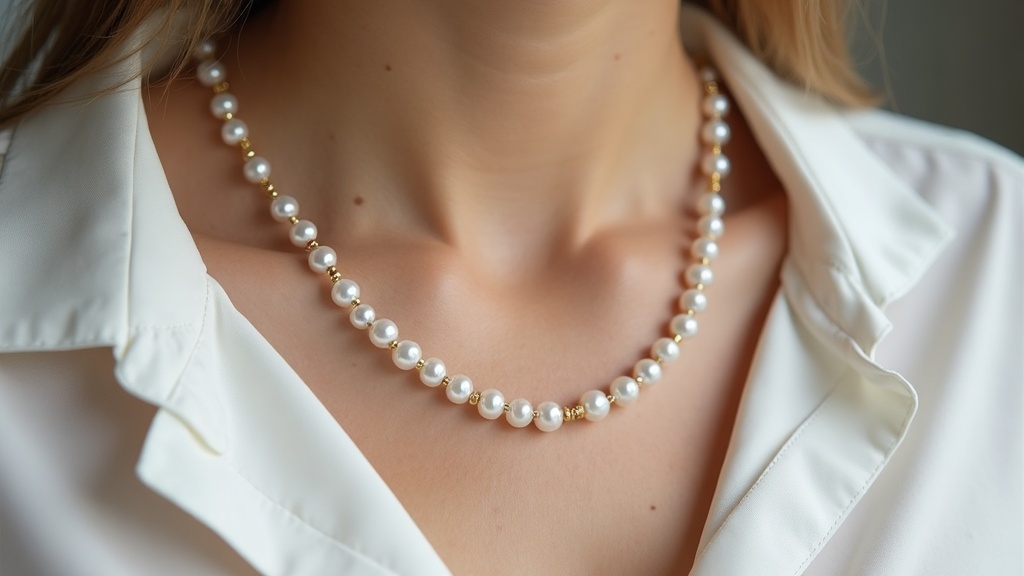
Designer Mia Katrin notes that “a 16- to 18-inch freshwater pearl necklace with 7 to 8 millimeter pearls is the sweet spot for everyday wear because it sits elegantly at the collarbone without feeling formal” (JCK, 2025)[7]. For dramatic effects, matinee or opera lengths provide excellent layering. When consulting a buying guide for freshwater pearls, consider how the length interacts with your wardrobe. Additionally, ensure the clasp mechanism is proportionate to the strand’s weight for comfortable wear.
Styling Your Freshwater Pearls
Modern styling techniques have transformed these classic gems into versatile accessories. Gone are the days when a strand was strictly reserved for formal occasions. Today, enthusiasts embrace a relaxed approach, mixing traditional elements with modern metals. The natural overtones and smooth drape make them incredibly adaptable.
One popular trend is layering a classic strand with metallic chains. Pairing a simple 18-inch strand with a striking unique silver necklace adds an edge to traditional outfits. The contrast between soft iridescence and sharp sterling silver creates a dynamic ensemble.
Another method involves incorporating thematic pendants. Adding a delicate silver butterfly necklace to a shorter choker introduces a whimsical element perfect for spring. For a highly personalized touch, some wearers pair their pearls with a custom cat silhouette pendant to celebrate their love for pets.
When styling, consider your clothing’s color palette. White pearls pair beautifully with navy and pastels, while peach varieties add a subtle pop to neutrals. This creative freedom is why a freshwater pearl jewelry guide is valuable for modern shoppers.
Care and Maintenance
Proper care and storage are essential to preserve the luster and structural integrity of cultured pearl jewelry. These organic gems are softer than many gemstones, making them susceptible to chemical damage. As Russell Shor points out, these pieces “offer tremendous value because cultured mussels can produce multiple pearls at once, creating strands with excellent color and luster at accessible prices” (GIA, 2025)[9]. Protecting this value requires mindful daily wear.
The golden rule is to put pearls on last and take them off first. They should be applied after makeup and perfume have dried. Chemicals can dull the surface and degrade the silk thread. When removing the strand, gently wipe it with a soft cloth to remove skin oils.
Storage is equally critical. Never toss a strand into a crowded box where it can be scratched. Store it flat in a soft pouch. Hanging the necklace can stretch the stringing material, compromising the drape.
Finally, have the strand professionally restrung every one to two years. Marianne Fisher notes that “a strand of well-matched freshwater pearls, with consistent overtones and a smooth drape, will always look more luxurious” (AGS, 2025)[8], and proper restringing maintains that flawless drape.
Your Most Common Questions
How do I tell if a pearl is real or fake?
Why are freshwater pearls generally more affordable than saltwater varieties?
Can I wear my pearl necklace in the shower or swimming pool?
What is the best way to clean pearls at home?
Comparing Pearl Types
Understanding the differences between various cultured pearl types helps buyers select the best option for their specific needs and budget. While a freshwater pearl necklace guide focuses on one category, comparing it to others provides valuable market context.
| Feature | Freshwater | Akoya | South Sea |
|---|---|---|---|
| Origin | Lakes and rivers | Coastal ocean waters | Tropical ocean waters |
| Typical Size | 7.5-8.5 mm | 6-9 mm | 9-20 mm |
| Price Point | Highly accessible | Moderate to high | Premium luxury |
| Luster | Soft, satiny glow | Sharp, mirror-like | Deep, luxurious |
Practical Tips for Buyers
When shopping for your next piece of jewelry, keep a few practical strategies in mind to ensure a satisfying purchase. First, always examine the strand in natural daylight if possible. Artificial store lighting can artificially enhance the luster and mask surface blemishes, so viewing the gems near a window provides a more accurate representation of their true quality.
Second, pay close attention to the knotting between each gem. High-quality strands are individually knotted, which prevents the gems from rubbing against one another and ensures that if the thread breaks, you only lose a single pearl rather than the entire strand. The knots should be tight and uniform, with minimal gaps between the gems.
Finally, consider the clasp mechanism. A secure lobster clasp or a well-crafted fishhook clasp is essential for keeping your jewelry safe. Some modern designs also feature interchangeable clasps, allowing you to swap a simple metal closure for a decorative gemstone pendant, effectively giving you two necklaces in one. Applying these tips will help you confidently navigate the market and select a beautiful, durable piece.
Before You Go
Selecting the perfect strand requires balancing quality factors, sizing, and personal style. By applying the insights from this comprehensive freshwater pearl necklace guide, you can confidently evaluate luster, nacre thickness, and length to find a piece that perfectly suits your everyday wardrobe. Whether you prefer a classic 18-inch princess length or a modern, eclectic layered look, understanding these core fundamentals ensures a wise and lasting investment. To continue exploring elegant accessories, discover more styling inspiration, and read our latest gemstone reviews, browse the extensive collections and expert advice available on jewelrycurrent.com today.
Useful Resources
- Pearl Market Overview 2024. GIA (Gemological Institute of America).
https://www.gia.edu/doc/pearl-market-overview-2024.pdf - 2025 Pearl Size Demand Report. Pearl Paradise.
https://www.pearlparadise.com/blogs/news/2025-pearl-size-demand-report - 2025 Pearl Jewelry Sales Trends. Jewelers of America.
https://www.jewelers.org/files/2025-pearl-jewelry-sales-trends.pdf - Freshwater Pearl Nacre Thickness Study. Journal of Gemmology.
https://gem-a.com/journal-of-gemmology/volume-39-2024/freshwater-pearl-nacre-thickness-study - Understanding Pearl Quality: Luster, Surface and Nacre. Gemological Institute of America (GIA).
https://www.gia.edu/pearl-quality-factor - Blue Nile Pearl Buying Tips: Freshwater vs. Akoya. Blue Nile.
https://www.bluenile.com/education/pearls-buying-guide - How to Choose the Right Pearl Necklace Length and Size. JCK.
https://www.jckonline.com/editorial-article/how-to-choose-pearl-necklace-length-size/ - AGS Expert Advice: Evaluating Pearl Necklaces. American Gem Society.
https://www.americangemsociety.org/evaluating-pearl-jewelry/ - A New Era for Cultured Pearls. Gemological Institute of America (GIA).
https://www.gia.edu/gia-news-research/cultured-pearls-market-trends
For more about Cat lover gift guide, see Cat Lover Gift Guide.